Chimney Swift Towers
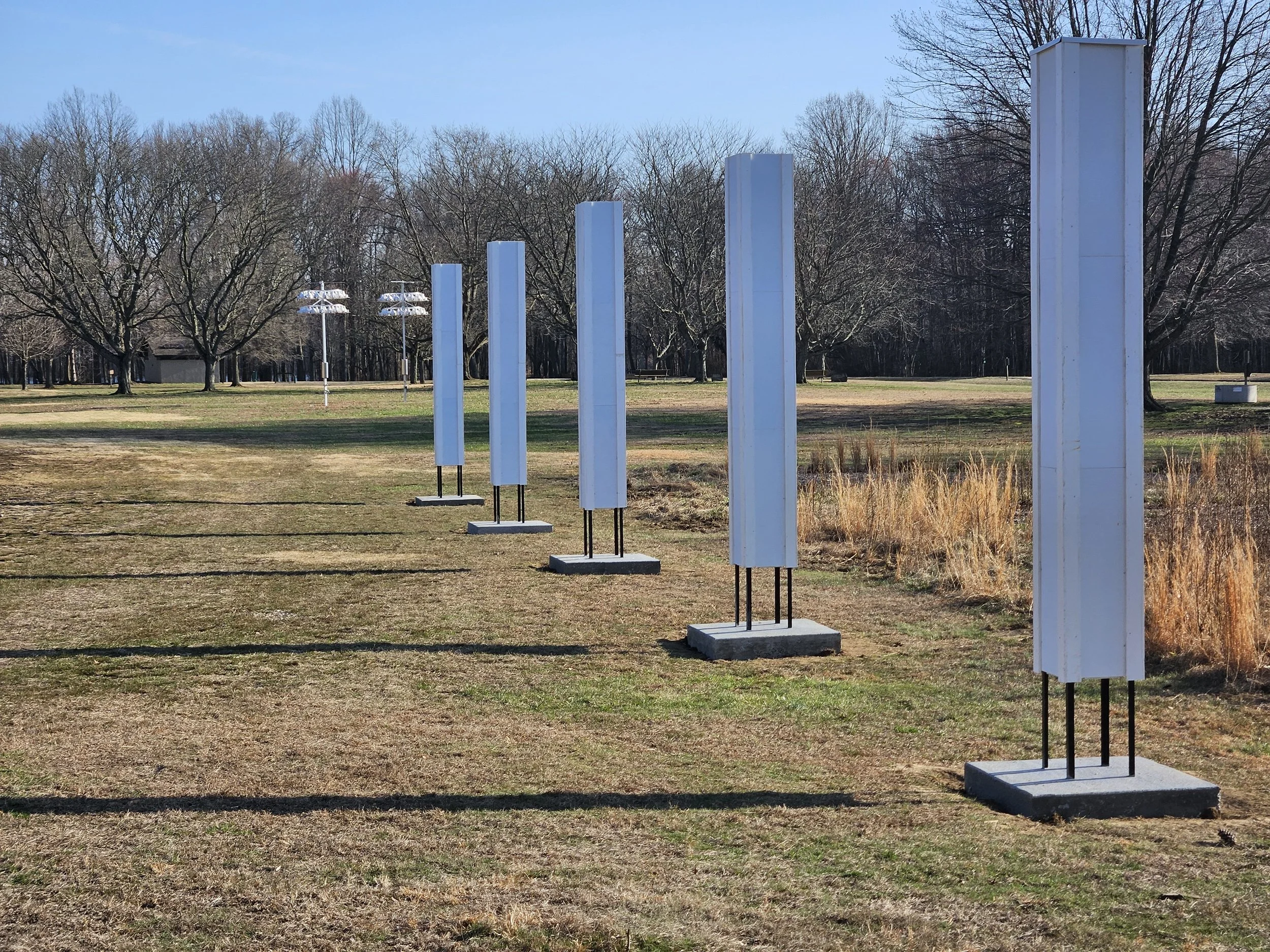
Chimney Swift towers in Area 2 at Lums Pond State Park
Thanks to the generosity of a Delaware Audubon supporter, 5 nesting chambers for Chimney Swifts are now in place in Area 2 at Lums Pond State Park. The simulation chimneys are 14’ tall with the inner chamber measuring 14 1/2” square. The Swifts enter through the open top and build nests on one of the sides. One tower accomodates one Chimney Swift nest, so a maximum of 5 nests will be built at the location, with each nest typically having 3 to 5 eggs.
Chimney Swifts are in serious decline, with populations falling by more than 50% to over 70% in the last 50 years. They are listed as vulnerable and a "Tipping Point" species due to habitat loss from capping chimneys, fewer old-growth trees for nesting, and reduced insect food sources.
In Delaware, Chimney Swifts were ranked as Tier 1, the highest level of conservation need, in the 2025 edition of the Species of Greatest Conservation Need, an accounting by the Division of Fish and Wildlife at the Department of Natural Resources and Environmental Control.
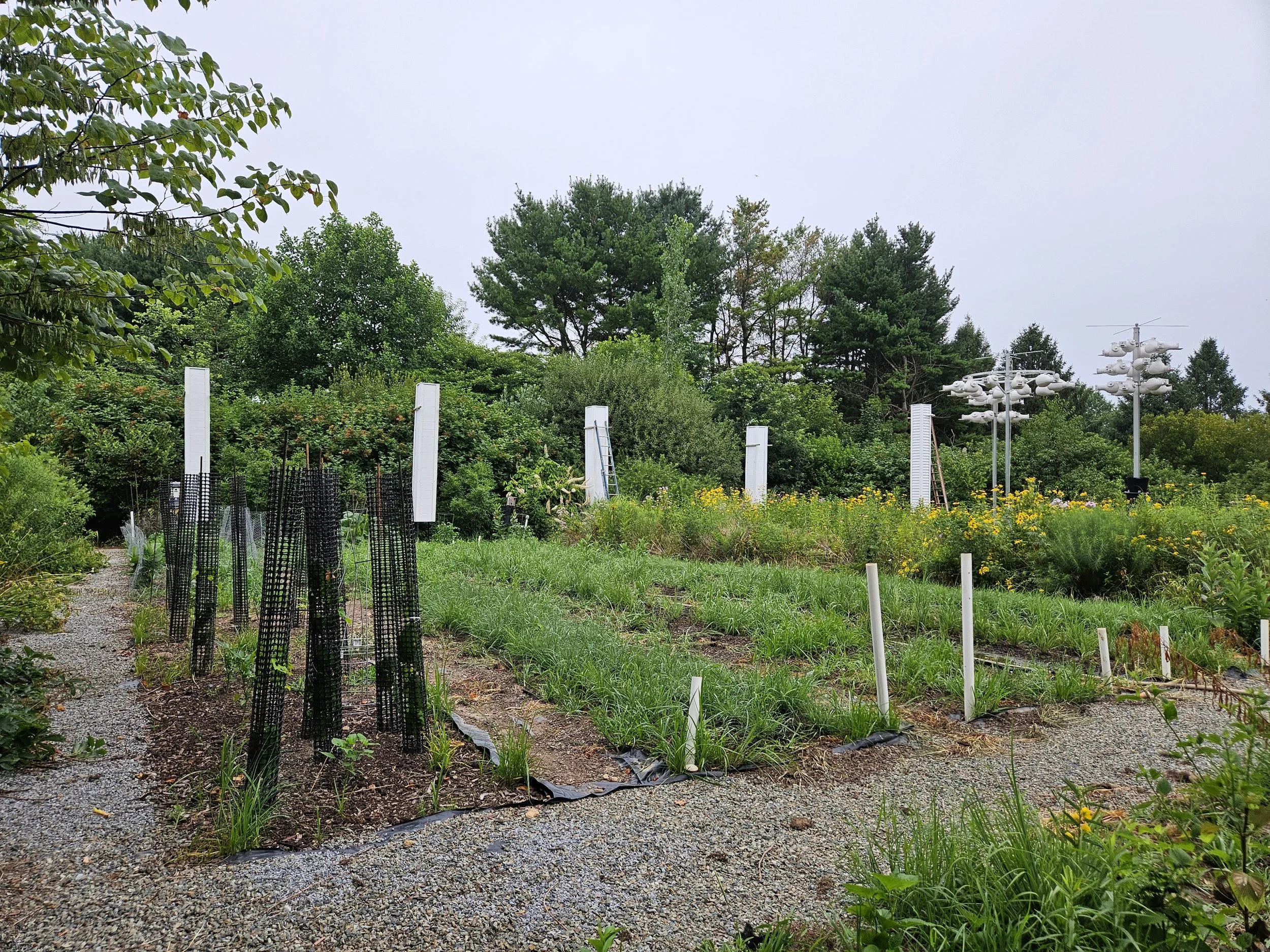
Delaware Audubon president Steve Cottrell built five 14-foot towers for chimney swifts to nest in the yard of his home near Newark
Information about Chimney Swifts can be found on the website of the Chimney Swift Conservation Association. Plans for building a Chimney Swift tower are available online.
In October, Chimney Swifts leave the area and begin their migratiton to their wintering grounds in the upper Amazon basin of Peru, Ecuador, Chile, and Brazil. They begin their migration northward in February, and the first Chimney Swifts can be expected to be seen flying over Lums Pond State Park in mid-April, A substantial colony of Chimney Swfts is expected to use the towers for night roosting in May and early June before the dispersing to find their own nesting sites, leaving the Lums Pond towers for 5 nesting pairs.